
Sunken Concrete Is More Than an Eyesore
A sunken driveway panel, a tilted patio slab, or an uneven sidewalk section might seem like a cosmetic nuisance, but they carry real consequences. Uneven concrete creates trip hazards for family members and guests, can void homeowner insurance claims if injuries occur, directs water toward your foundation instead of away from it, and signals that the soil beneath the slab has eroded, compressed, or washed away.
For Thousand Oaks homeowners, the good news is that full slab replacement is rarely necessary. Slab leveling — using either traditional mudjacking or modern polyurethane foam injection — can restore settled concrete to its original grade at a fraction of the cost of tearing out and pouring new flatwork.
But which method is right for your situation? This guide breaks down both techniques so you can make an informed decision.
What Is Mudjacking?
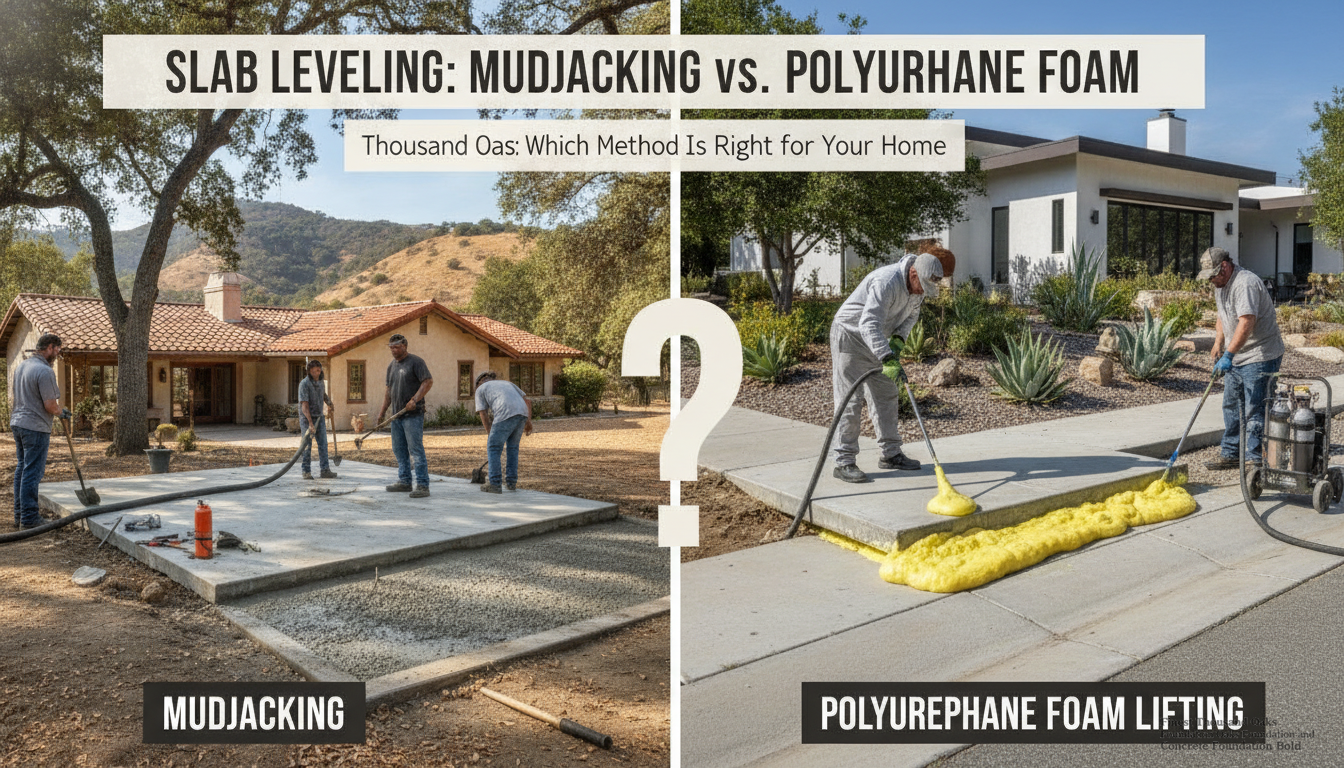
Mudjacking — also called slabjacking or pressure grouting — is the original slab lifting technique and has been used successfully for decades. The process involves drilling a series of 1.5- to 2-inch holes through the sunken concrete slab, then pumping a cement-soil-water slurry (the "mud") under pressure beneath the slab through those holes. As the slurry fills voids and builds pressure, it lifts the slab back to its original position. The holes are then patched with concrete.
Mudjacking is a proven, cost-effective method that works particularly well for:
- Large flatwork surfaces like wide driveways, pool decks, and garage aprons
- Situations where significant void filling is needed beneath the slab
- Projects where budget is the primary consideration
- Areas where the heavier fill material adds beneficial stability
The main tradeoffs with mudjacking are the larger drill holes (which are more visible after patching), the 24-hour curing period before vehicle use, and the added weight of the slurry fill — which can be a consideration on already-compromised subgrades.
What Is Polyurethane Foam Lifting?
Polyurethane foam injection is the newer technology that has become the preferred method for many residential slab leveling projects across the Conejo Valley. Instead of slurry, a two-part expanding polyurethane foam is injected through much smaller 5/8-inch holes. The foam expands to fill voids, bonds to the underside of the slab, and lifts it — all within seconds of injection. The foam cures to a rigid cellular material in minutes.
Polyurethane foam lifting excels in these scenarios:
- Residential driveways, patios, walkways, and pool decks where aesthetics matter
- Slabs near structures where adding heavy fill weight is undesirable
- Projects where fast return to service is important — foam-lifted slabs can handle foot traffic in 15 minutes and vehicle traffic within an hour
- Areas with previously compromised or moisture-sensitive subgrade soils
- Interior garage floors and indoor concrete slabs
The tradeoff is cost — polyurethane foam lifting typically runs higher per square foot than mudjacking, though the price gap has narrowed as the technology has become more mainstream.
How Thousand Oaks Soil Conditions Affect Your Choice
The Conejo Valley is known for its expansive clay soils, which absorb water and swell during winter rains, then shrink and crack during dry summers. This seasonal volume change is a primary driver of slab settlement in neighborhoods from Lynn Ranch to Westlake Village.
In areas where soil instability is the primary cause of settlement, polyurethane foam is often the better long-term solution because the lightweight, waterproof, non-erodible foam won't wash away or compress further the way a slurry fill sometimes can in wet soil conditions. The foam also bonds to the slab, providing some resistance to future movement.
For large flatwork areas where significant void fill is needed and the subgrade is relatively stable, mudjacking delivers excellent results at a lower material cost. Our team evaluates soil conditions, slab size, crack patterns, and your priorities before recommending the right approach for your specific property.
When Neither Method Is the Right Answer
Slab leveling works best when the concrete itself is in reasonably good structural condition — intact, with minor to moderate cracking. If a slab is extensively cracked, broken into multiple small pieces, or has suffered significant spalling or deterioration, lifting it may cause further breakage rather than a clean result.
In those cases, our team will recommend full slab removal and replacement through our concrete flatwork services. We pour new driveways, patios, sidewalks, and garage floors with proper subgrade preparation, reinforcement, and control joints — built to last through Thousand Oaks' climate cycles. We'll always give you an honest assessment of which approach makes more economic and structural sense for your situation.
What the Process Looks Like on Your Property
Whether we're mudjacking or foam-lifting, the process on your property is minimally disruptive. Our fully equipped lifting rig arrives, we mark the drill hole locations based on slab size and settlement pattern, drill the holes, inject the lifting material while monitoring the slab's rise with level tools, and stop when the target grade is achieved. Holes are patched, cones are removed, and most residential jobs are completed in a single day.
We also address the drainage and grading issues that contributed to the settlement in the first place — because lifting a slab without improving drainage is a temporary fix. Correcting downspout discharge, regrading soil away from the slab, and ensuring surface water flows away from your home are all part of a comprehensive approach.
Ready to Fix That Sunken Slab?
If you have a sunken driveway, uneven patio, trip-hazard sidewalk, or settled garage floor in Thousand Oaks or the surrounding area, Finest Thousand Oaks Foundation and Concrete is ready to assess the situation and recommend the most cost-effective solution. We serve Thousand Oaks, North Ranch, Lake Sherwood, Westlake Village, and the entire Conejo Valley region.
Call us at (820) 777-4449 or email [email protected] — we're available Monday through Sunday
Discuss This With Our Team
Call +18207774449 or fill out our online form for a free, no-obligation quote.
Request Free Quote